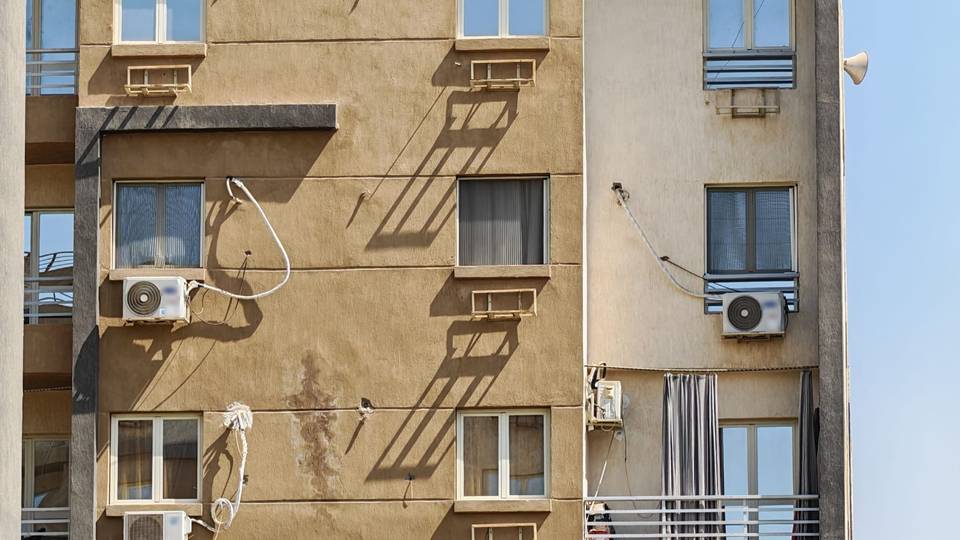
Split: the right choice for most rooms
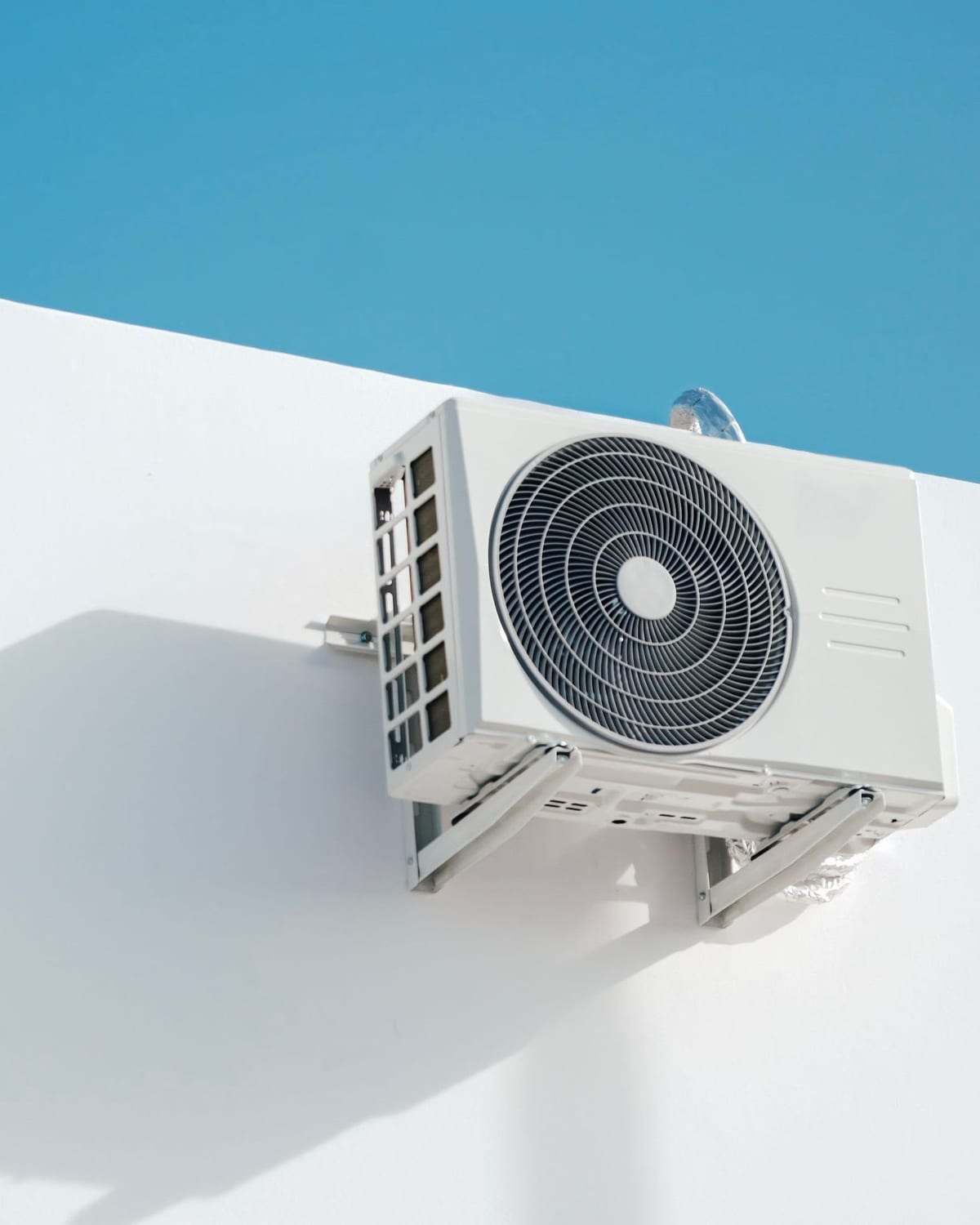
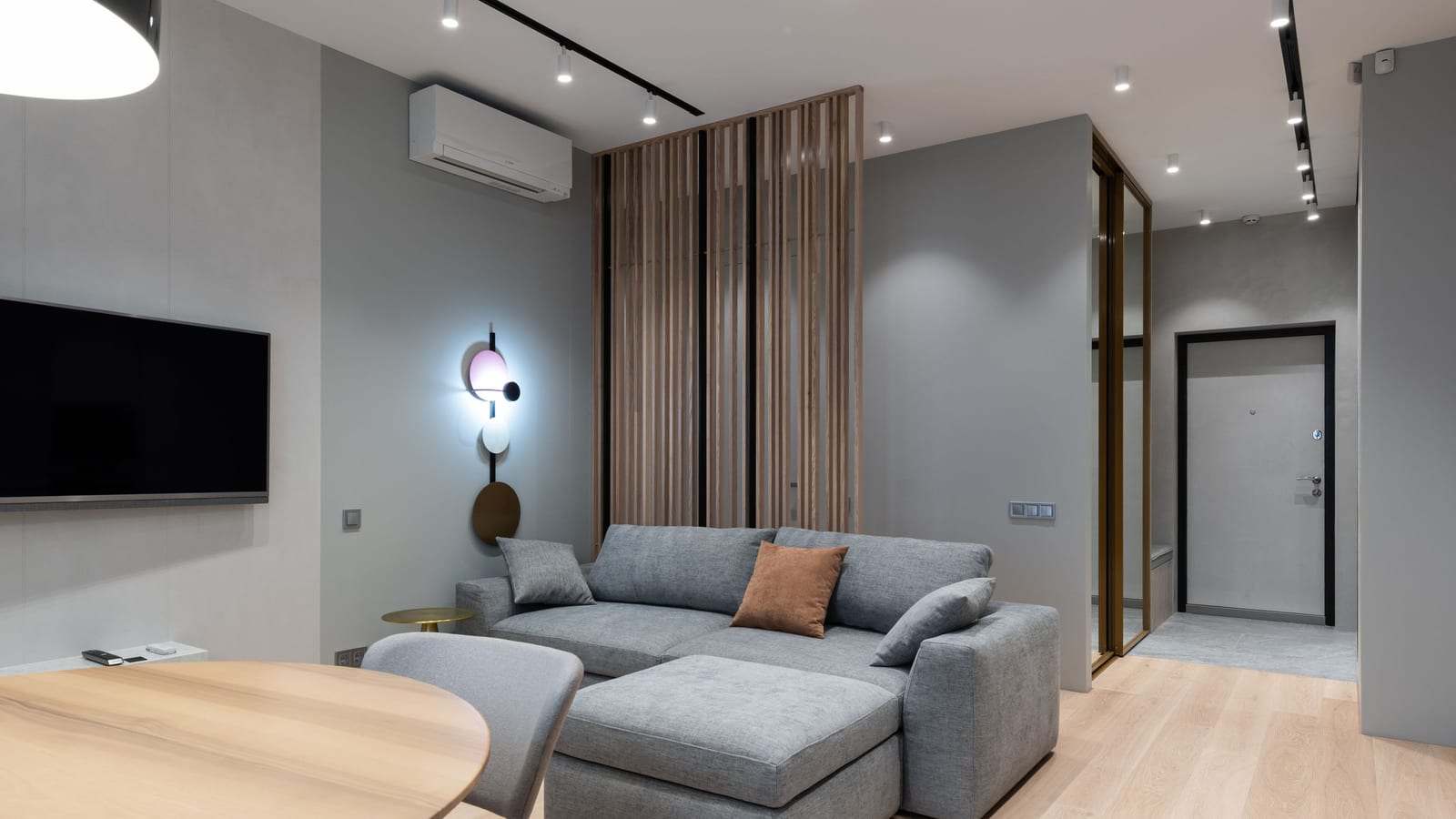
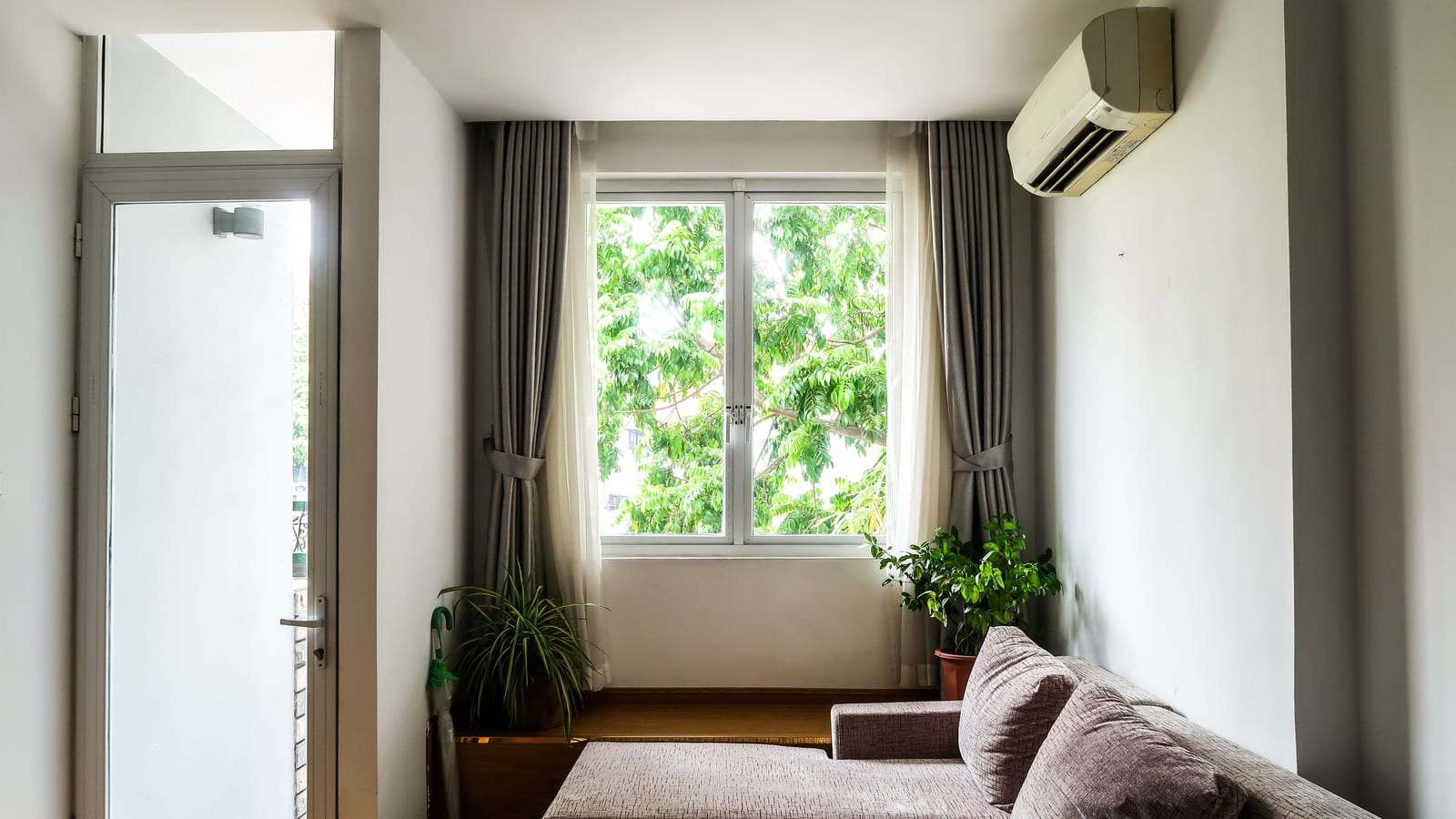
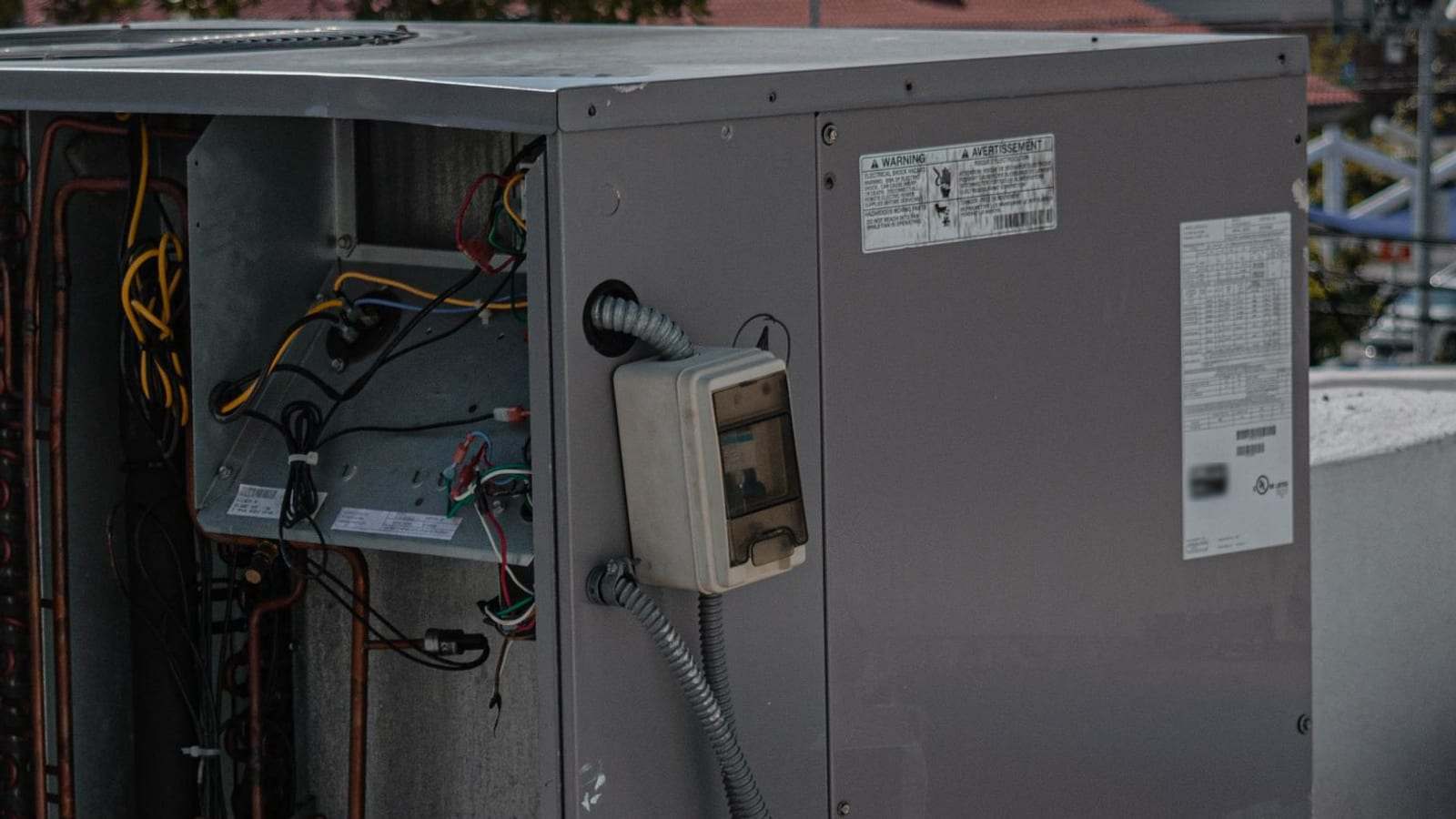
A split has two units. An indoor unit on the wall blows the cold air, and an outdoor unit with the compressor and fan sits on the roof, facade or balcony, connected by copper pipes and cables. Because the compressor is outside, a split is much quieter than a window unit, which is what makes it the natural choice for bedrooms and living rooms. Inverter models are widely available too, adjusting compressor speed to demand instead of switching on and off.
Its drawbacks are that it needs professional installation with vacuuming, piping and drainage, a suitable place for the outdoor unit, and that moving it to a new home is more involved than a window unit. Maintenance means cleaning the filter yourself and a deep clean of both units once or twice a year, as explained on our AC cleaning page.
Window: simple and strong, but louder
A window AC is a single unit fitted into an opening in the wall or window, half inside the room and half outside. For decades it was the first choice in Saudi homes, and it is still common in older houses, annexes, warehouses and drivers’ rooms. Its great advantage is simplicity. There is no piping between two units, removing and moving it is easy, and most technicians know it inside out.
But the compressor sits in the unit itself, so it is clearly louder in the room, which is why many people replace it with a split in bedrooms. It needs a hole in the wall that may not suit modern homes, and it faces the dust outside directly, so it gets dirty faster. Cleaning it properly usually means taking it out of the wall, so do it before every summer.
Floor-standing: lots of power, no ceiling work
A floor-standing unit is a type of split whose indoor unit stands on the floor like a cabinet instead of hanging on the wall. It moves a large volume of air, so I see it often in large majlis rooms, halls and shops without a false ceiling.
Its advantages are that it needs no special ceiling and is easy to reach for maintenance. Its drawbacks are that it takes up floor space and may not spread air evenly in long rooms. If you have one, mention it when you book a clean, because it is handled differently from a wall-mounted split.
Cassette: for large majlis rooms and offices
A cassette is another kind of split whose indoor unit is set into a false ceiling and blows air in four or more directions. It suits large spaces such as big majlis rooms, open-plan offices, shops and restaurants, where a single wall unit struggles to cover the area evenly.
It needs a false ceiling with enough depth, good drainage because its tray is larger, and regular maintenance with the technician working at ceiling height. In humid cities like Jeddah and Dammam I have often seen a neglected cassette tray turn into a smell, and then a leak that stains the plasterboard.
Central and concealed systems
In a central or concealed system, the indoor unit sits above the false ceiling or in a plant room, and cold air travels through ducts to grilles in each room. All you see in the room are neat vents in the ceiling, and the air is spread evenly and comfortably.
This type suits new villas and buildings designed from the start to take ductwork. But it needs a proper engineering load calculation, installation during construction or fit-out, and specialist maintenance of filters, ducts and drainage. If you are building or renovating, read our central and concealed AC page and ask for a site survey before deciding. A mistake here cannot be fixed by swapping a unit.
Which type for which space?
This is a summary of what I usually advise customers, a starting point rather than a rule:
- Bedroom: a wall-mounted split for quiet; a window unit is fine if the opening exists and the noise does not bother you.
- Living room or large majlis: a split of the right capacity or two units, a floor-standing unit, or a cassette if there is a false ceiling.
- Rented flat: a split or window unit, respecting building rules on where outdoor units can go.
- New villa: central or concealed, planned from the design stage, or a mix of concealed and split units.
- Shop or office: cassette, concealed or split depending on the space and ceiling, with details on our commercial AC page.
And an annex or storeroom? There, a window unit is still a practical, simple choice.
Your city’s climate changes some of the sums
In Riyadh and the dry inland cities, dust is the biggest challenge, so choose an outdoor unit position that is easy to wash, and bear in mind that a window unit faces the dust head-on. Details are on our AC installation in Riyadh page.
In Jeddah, Dammam and the coastal cities, humidity and salt make good drainage and corrosion resistance of the outdoor unit more important than anything else, and concealed and cassette units need particular care with the tray and drain. See AC installation in Jeddah and AC installation in Dammam.
The position of the outdoor unit matters in every city. Partial shade, good ventilation and easy access for maintenance extend the life of any AC, whatever its type.
Capacity matters more than type
Whatever the type, the right capacity is what decides whether the AC will cool the room on the hottest days. Too little and it runs non-stop without coping; too much and it cools quickly then stops without pulling out the humidity. The need depends on the room’s area and ceiling height, which way it faces, the size of its windows, how many people use it and how well it is insulated.
I explain this in detail, with rough BTU figures by floor area, in our guide how to choose the right AC size and type for your room. A technician can confirm the estimate on a site visit.
Before you buy and install
Compare the energy labels between models, make sure spare parts and service for the brand are available in your city, and ask about the warranty on the compressor and parts and who provides it. Do not cut corners on installation. Proper vacuuming and good drainage protect the AC for years, and an excellent unit installed badly is still a bad AC.
If you decide to buy, you can request offers on a new AC with or without installation, or request installation offers if you already have the unit.
FAQ
Which uses less electricity, a split or a window AC?
It depends on the efficiency of the model itself, not just the type. Compare energy labels; high-efficiency and inverter models are usually cheaper to run.
Can a concealed AC be installed in an existing home?
In some cases, if there is a false ceiling or one can be built, and room for duct runs, but it is far easier during construction. A site survey will tell you.
Which type of AC is the quietest?
Central and concealed systems, then splits, because the compressor is outside the room. Window units are usually the loudest.
Should I replace my old window AC with a split?
If the noise bothers you, or the window opening lets in dust and heat, a split is a good choice. It needs a place for the outdoor unit and piping, though, so ask for a site visit to see whether it works in your home.