Check the simple things first
Before you assume a major fault, look at the remote. I have lost count of the houses where I found the AC on fan or dry mode, or set to a temperature higher than the room itself. Make sure the snowflake symbol is showing, and change the batteries if the display looks faint.
Then open the front cover of the indoor unit and take out the filters. If they are coated in a grey layer of dust, you have probably found the cause. Air cannot pass through the coil and the AC is suffocating. Wash them in lukewarm water, let them dry completely in the shade, then put them back.
Look at what is around the AC too. A unit sized for a closed room will not cope if the living-room door is open, or if the midday sun pours through a large window without a blind. Finally, check that the AC breaker in the fuse box has not tripped and that you can actually hear the outdoor unit running. After any change, give the AC at least a quarter of an hour before you judge it. A hot room takes time.
When the outdoor unit is silent or cutting out
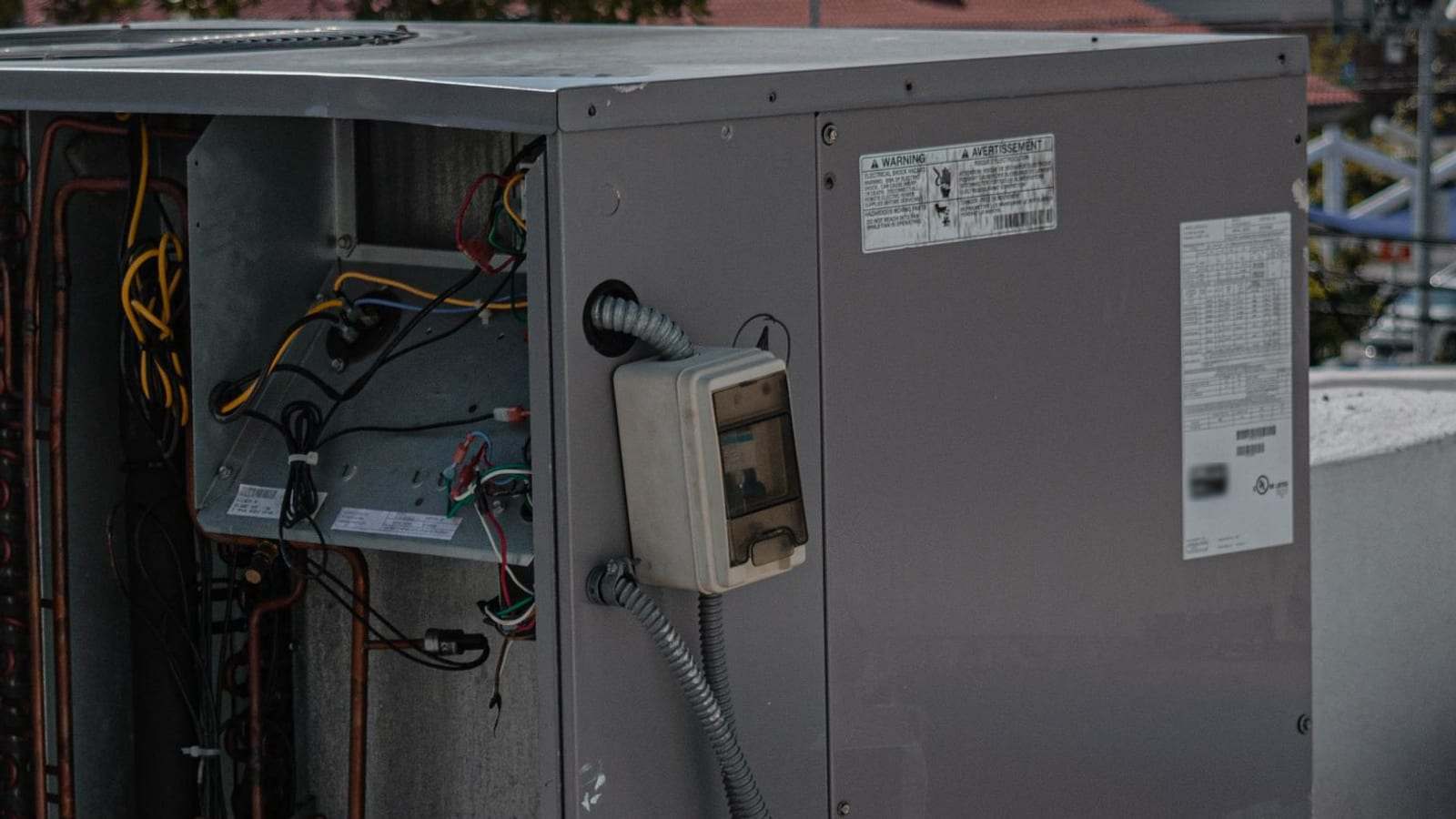
In a split AC the indoor unit only blows air. The real cooling happens in the outdoor unit, thanks to the compressor and the fan. So if air comes out inside but it is not cold, go outside and listen.
If the outdoor fan is not turning, if you hear a hum without movement, or if the compressor runs for a few minutes and then stops, these are signs I see very often of a failed capacitor or a problem with the fan motor. The capacitor is a small part, but it suffers badly in our long summers, and replacing it is strictly a technician’s job because it holds a dangerous electrical charge even after the power is switched off.
If the outdoor unit is completely silent, the cause may be the wiring, the contactor or the control board. In all of these cases do not open anything yourself. Request AC repair and describe exactly what you heard and saw.
A dirty condenser in dusty cities
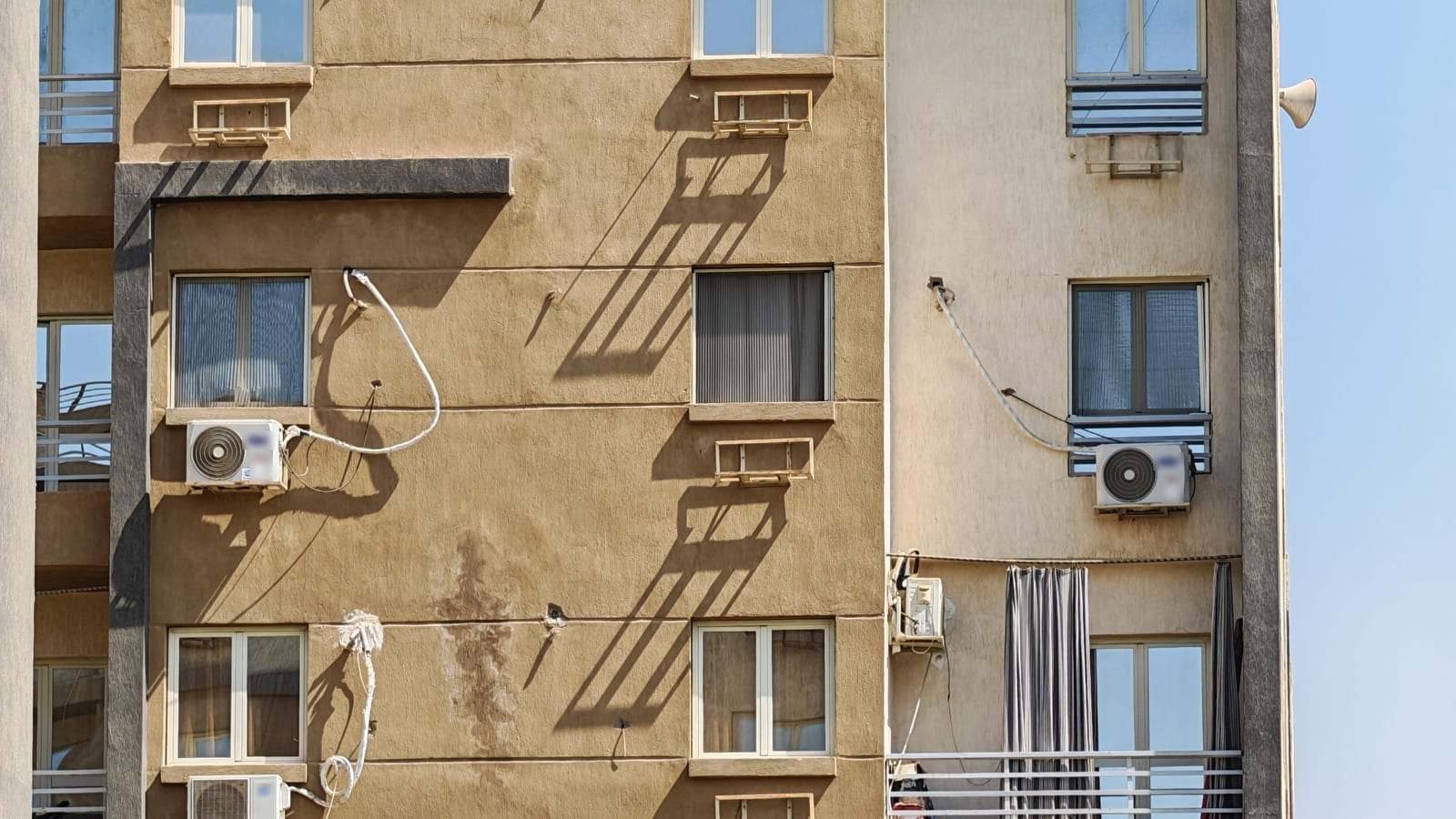
The outdoor unit gets rid of the heat your AC has pulled out of the room through thin metal fins called the condenser. When dust, sand and leaves build up on them, or salt near the sea corrodes them, the unit cannot shed heat. Cooling weakens, the bill rises and the compressor runs hotter than it can stand.
I see this after every dust storm in Riyadh and the central region, and in coastal cities where dust mixes with humidity and sticks. The fix is washing the condenser at a pressure that does not bend the fins, a core part of professional AC cleaning. On your side, do not put things on or against the outdoor unit, leave space around it for air to flow, and if it sits in the sun all day, ask the technician about a shade that does not block ventilation.
Low refrigerant and what it means
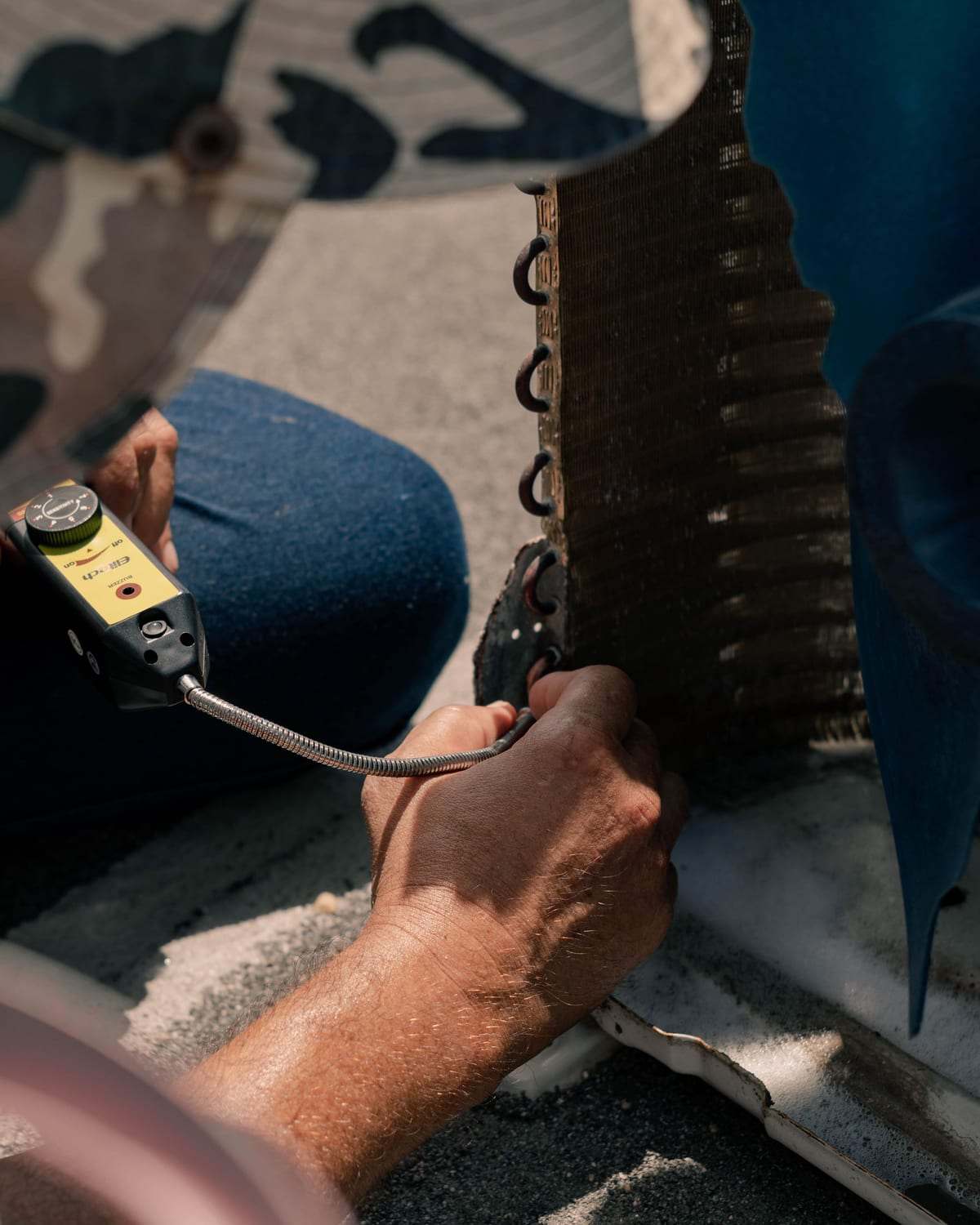
Refrigerant, often called freon, circulates in a closed loop and is not used up over time, whatever many people believe. If it is low, there is almost always a leak somewhere, at the pipe joints, in the coil or at the service valves.
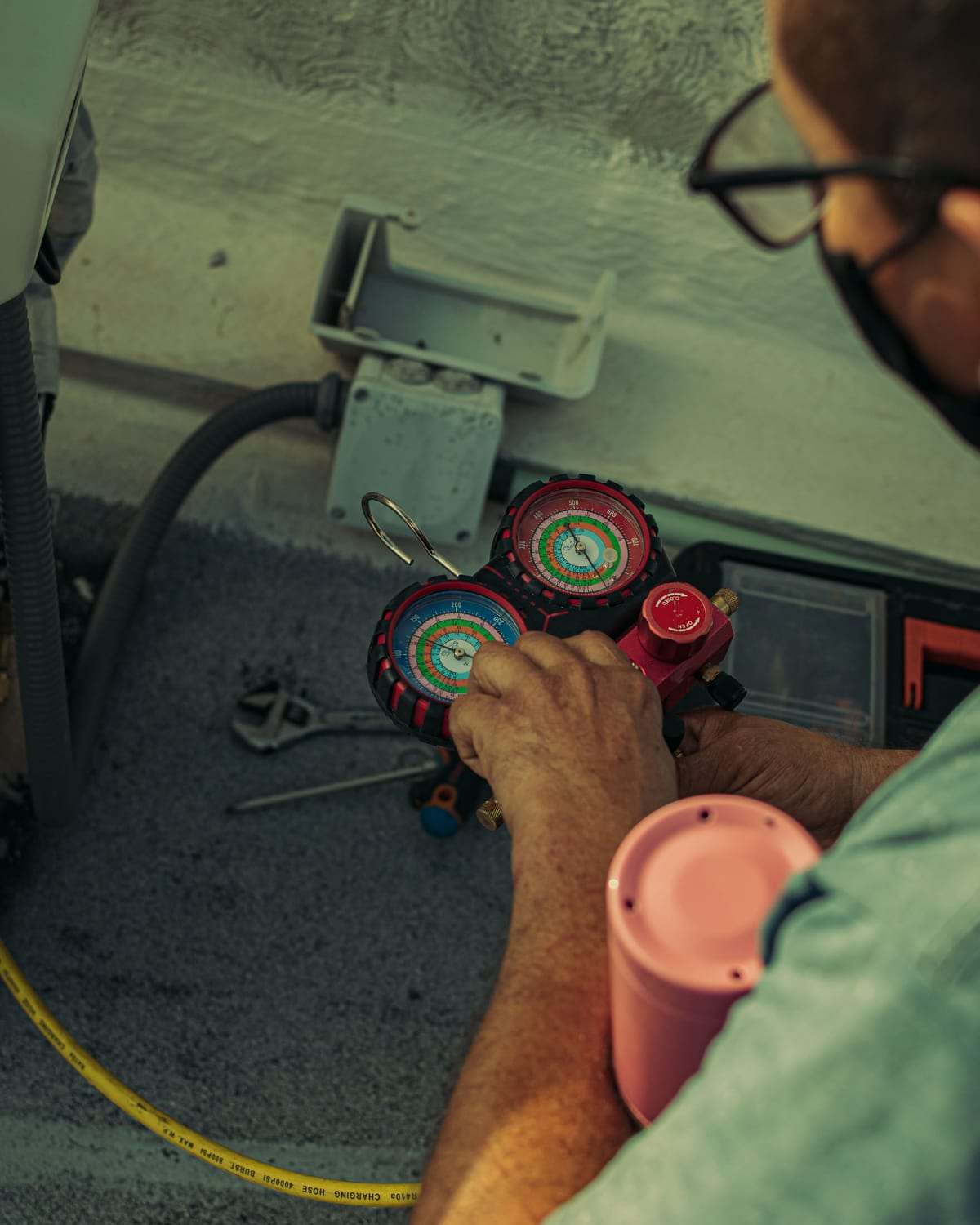
The signs are lukewarm air even though the outdoor unit is running, ice forming on the thin copper pipe at the outdoor unit or on the indoor coil, and a compressor that runs for a long time without cooling the room. A good technician does not just top it up. He measures the pressure, finds the leak and repairs it first, otherwise the problem returns within weeks and you pay twice. There is more in our guide to signs your AC needs a refrigerant refill.
When the coil turns to ice
You may notice that the AC cools at first and then weakens, and that water starts dripping from the indoor unit after you switch it off. That usually means the indoor coil has frozen. The ice blocks the airflow so cooling drops, and when it melts the drain tray overflows.
The most common causes are a clogged filter or dirty coil, a weak indoor fan, or low refrigerant. If you see ice, switch off cooling and run the fan alone until it melts, then clean the filter. If the icing comes back within a day or two, the problem runs deeper and needs a technician.
An ageing AC, or one too small for the room
Sometimes there is no specific fault at all. An AC that has worked for many years through hot summers loses some of its efficiency, especially without regular maintenance. And a low-capacity unit in a large majlis with a high ceiling, or in a west-facing room in full sun, may not cope on the hottest days even when it is in perfect order.
If the AC breaks down often and keeps needing parts, or is a very old model, replacing it may be better value in the long run. A technician can assess that, and if you decide to buy, read how to choose the right AC size and type and request offers on a new AC.
How to describe the problem to a technician
A precise description shortens the diagnosis and means the company brings the right parts on the first visit. Mention in your request:
- The type of AC and how many units are affected.
- Whether the outdoor unit runs, and if you can hear the fan and compressor.
- Whether ice forms on the pipes or water leaks.
- When the problem started, and whether it followed a power cut or a dust storm.
- When the last service or clean was.
You can request repair offers from companies in your city with a single request, and they will contact you to confirm the details and book an inspection.
Prevention for next summer
Most of the causes I have described build up slowly. Dust in the filter, then on the coil, then in the condenser, then extra strain on the compressor and capacitor until one of them gives up on the worst day of August. Maintenance before summer breaks that chain early.
Clean the filters regularly in the hot months, and book periodic maintenance before summer starts, including checks on the electrics, the capacitor and the pressure, and washing both units. The full preparation plan is in our guide to preparing your AC for summer.
FAQ
Why is my AC blowing warm air?
Usually because the outdoor unit is not running because of the capacitor, the fan or the power supply, because refrigerant is low, or simply because the mode is set to fan or heating. Start with the settings, then listen to the outdoor unit.
Can I top up the refrigerant myself?
No. Handling refrigerant needs gauges and experience, and low refrigerant almost always means a leak that must be fixed before any refill.
My AC cools at night but not at midday. Why?
Its capacity may be too low for the room in the hottest hours, the condenser may be dirty, or the refrigerant slightly low. Only an inspection will pin down the cause.
How often should I clean the filter?
About every two weeks in summer, and more often after dust storms. Details are in our guide on how often to clean your AC.